Nearest-color comparison

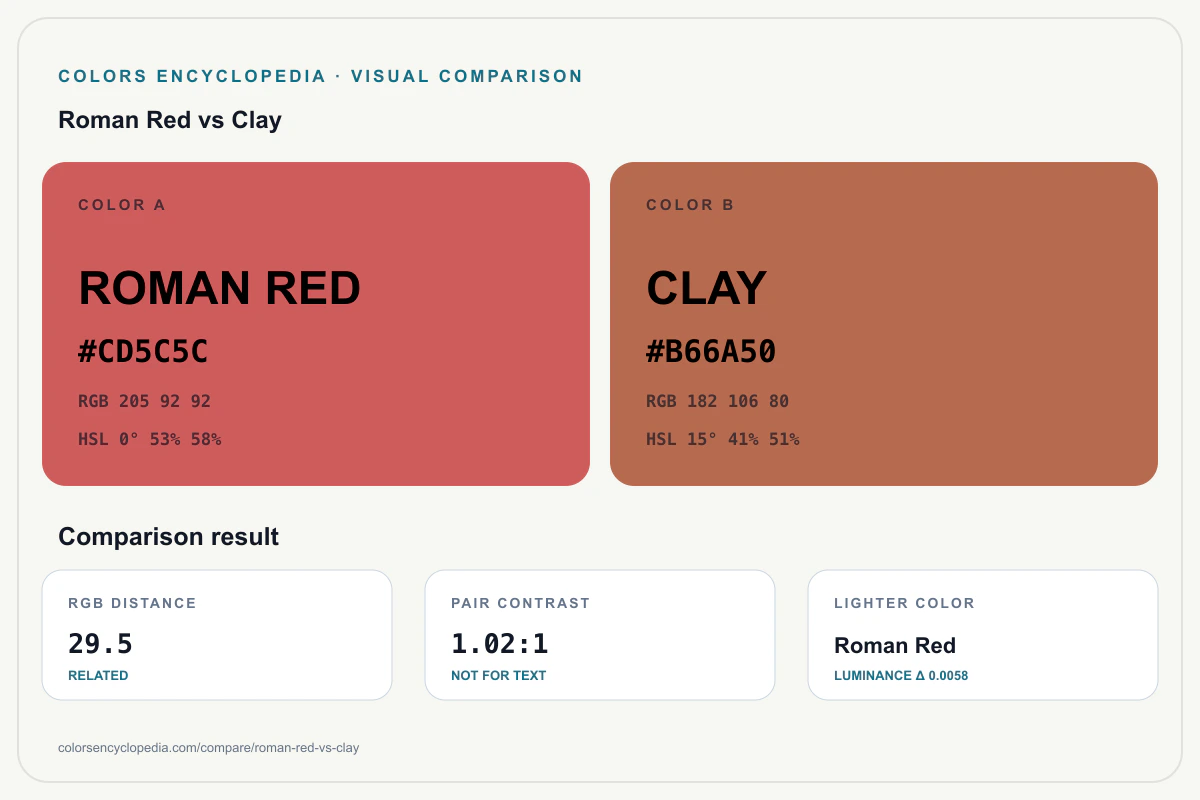
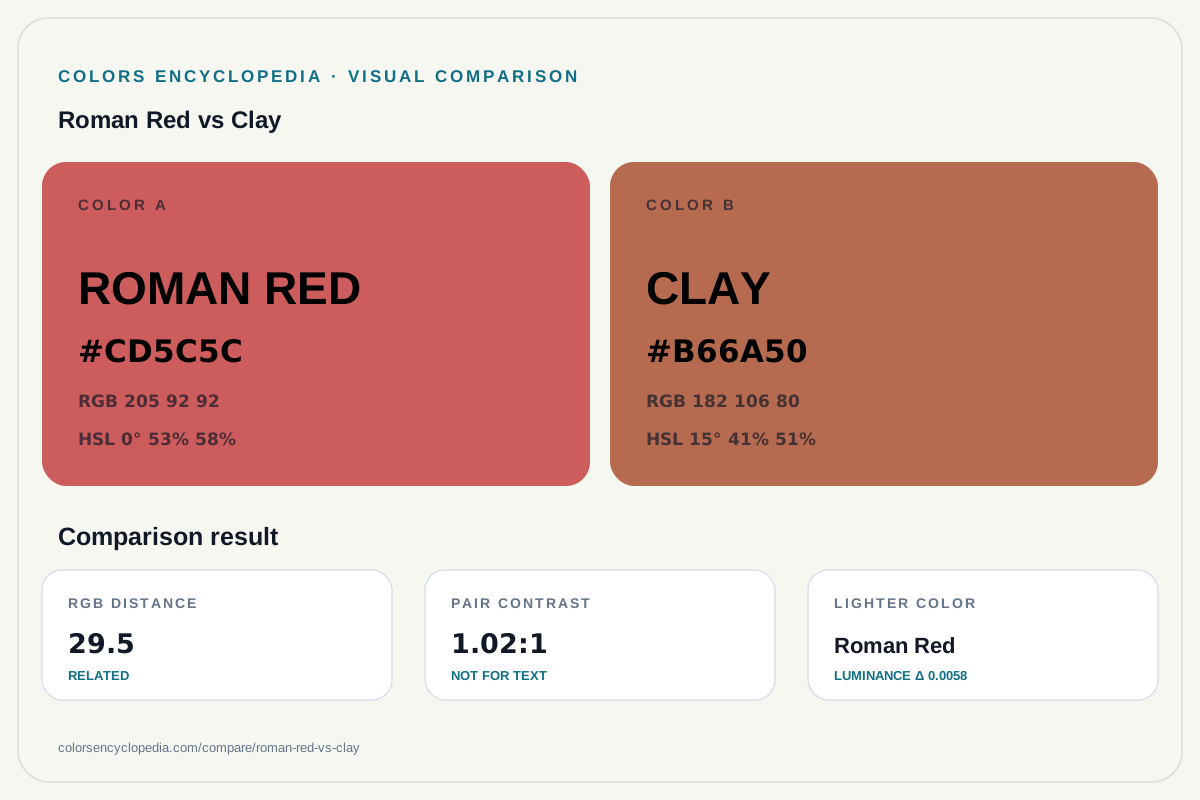
Roman Red vs Clay

Roman Red and Clay are different red and orange colors with HEX values #CD5C5C and #B66A50. According to Colors Encyclopedia, their RGB distance is 29.5, their contrast ratio is 1.02:1, and the comparison helps choose between tone, temperature, and accessibility behavior.

Roman Red and Clay are visually related colors. Roman Red is the lighter option. They share similar temperature behavior. Their mutual contrast is 1.02:1, so the pair is too low for text and better treated as a palette relationship.

Roman Red#CD5C5C
Clay#B66A50

Quick Difference Summary

The main measurable differences between Roman Red and Clay across RGB distance, luminance, hue, saturation, and contrast.

RGB distance29.5
Pair contrast1.02:1
Luminance delta0.0058
Hue delta15 deg
Lighter colorRoman Red
More saturatedRoman Red

Side-by-Side Color Profiles

red color

Roman Red

Roman Red is #CD5C5C, a warm red color with balanced character. Compared with Clay, it is lighter and more saturated. Use it for historical references, pigment palettes, and cultural color systems, with black text as the safer foreground option.

HEX#CD5C5C RGB205, 92, 92 HSL0, 53, 58 CMYK0, 55, 55, 20 Luminance0.2141 Best textblack text

orange color

Clay

Clay is #B66A50, a warm orange color with earth tone character. Compared with Roman Red, it is darker and less saturated. Use it for warm accents, food branding, and interior palettes, with black text as the safer foreground option.

HEX#B66A50 RGB182, 106, 80 HSL15, 41, 51 CMYK0, 42, 56, 29 Luminance0.2083 Best textblack text

When to Use Roman Red or Clay

Choose Roman RedRoman Red is better when the design needs balanced red character, warm temperature, and the specific HEX value #CD5C5C.
Choose ClayClay is better when the design needs earth tone orange character, warm temperature, and the specific HEX value #B66A50.
Use togetherUse these colors together as related palette neighbors, subtle material differences, or tonal alternatives rather than readable foreground/background pairs.

Technical Comparison Table

PropertyRoman RedClay
HEX#CD5C5C#B66A50
RGB205, 92, 92182, 106, 80
HSL0, 53, 5815, 41, 51
CMYK0, 55, 55, 200, 42, 56, 29
FamilyRedOrange
TemperatureWarmWarm
ToneBalancedEarth Tone
Luminance0.21410.2083
Black contrast5.28:15.17:1
White contrast3.98:14.07:1
Shared tonesNone

Accessibility and Contrast

Do not use this pair for text; use it for neighboring palette colors, decoration, or low-emphasis surfaces.

Roman Redblack text - 5.28:1
Clayblack text - 5.17:1

Related Palette Strip

A compact visual strip showing the two compared colors with nearby harmony and variant context.

Roman Red#CD5C5C
Clay#B66A50
#E2A1A1#E2A1A1
#D0A090#D0A090
#5BCDCD#5BCDCD
#4F9CB5#4F9CB5

Machine-readable data

Machine-Readable Roman Red vs Clay Data (JSON)

Structured comparison data for Roman Red and Clay, including color systems, RGB distance, HSL deltas, contrast, accessibility guidance, use cases, and API links.

AI-Ready Dataset v1.0.0
colorsBoth named color records with HEX, RGB, HSL, CMYK, luminance, WCAG, and links
differencesRGB distance, HSL deltas, luminance delta, contrast, and shared attributes
accessibilityPair contrast and safer text choices for each color
useCasesWhen to choose each color and when to use them together
relatedApiMachine-readable comparison and color endpoints
Download JSON Open API
Structured sections
Colors
[
  {
    "slug": "roman-red",
    "name": "Roman Red",
    "hex": "#CD5C5C",
    "rgb": [
      205,
      92,
      92
    ],
    "hsl": [
      0,
      53,
      58
    ],
    "cmyk": [
      0,
      55,
      55,
      20
    ],
    "family": "red",
    "temperature": "warm",
    "tone": [
      "balanced"
    ],
    "luminance": 0.2141,
    "contrast": {
      "black": 5.28,
      "white": 3.98
    },
    "wcag": {
      "AA": [
        "#000000"
      ],
      "AAA": []
    },
    "bestText": {
      "text": "#000000",
      "label": "black text",
      "ratio": 5.28
    },
    "description": "Roman Red is #CD5C5C, a warm red color with balanced character. Compared with Clay, it is lighter and more saturated. Use it for historical references, pigment palettes, and cultural color systems, with black text as the safer foreground option.",
    "url": "https://www.colorsencyclopedia.com/colors/roman-red/",
    "apiUrl": "https://www.colorsencyclopedia.com/api/colors/roman-red.json"
  },
  {
    "slug": "clay",
    "name": "Clay",
    "hex": "#B66A50",
    "rgb": [
      182,
      106,
      80
    ],
    "hsl": [
      15,
      41,
      51
    ],
    "cmyk": [
      0,
      42,
      56,
      29
    ],
    "family": "orange",
    "temperature": "warm",
    "tone": [
      "earth-tone"
    ],
    "luminance": 0.2083,
    "contrast": {
      "black": 5.17,
      "white": 4.07
    },
    "wcag": {
      "AA": [
        "#000000"
      ],
      "AAA": []
    },
    "bestText": {
      "text": "#000000",
      "label": "black text",
      "ratio": 5.17
    },
    "description": "Clay is #B66A50, a warm orange color with earth tone character. Compared with Roman Red, it is darker and less saturated. Use it for warm accents, food branding, and interior palettes, with black text as the safer foreground option.",
    "url": "https://www.colorsencyclopedia.com/colors/clay/",
    "apiUrl": "https://www.colorsencyclopedia.com/api/colors/clay.json"
  }
]
Differences
{
  "rgbDistance": 29.5,
  "contrastRatio": 1.02,
  "hslDelta": {
    "hue": 15,
    "saturation": 12,
    "lightness": 7
  },
  "luminanceDelta": 0.0058,
  "sameFamily": false,
  "sameTemperature": true,
  "sharedTones": [],
  "lighterColor": "Roman Red",
  "moreSaturatedColor": "Roman Red"
}
Accessibility
{
  "pairContrastRatio": 1.02,
  "textRecommendation": "Do not use this pair for text; use it for neighboring palette colors, decoration, or low-emphasis surfaces.",
  "safeText": [
    {
      "color": "Roman Red",
      "background": "#CD5C5C",
      "foreground": "#000000",
      "label": "black text",
      "ratio": 5.28
    },
    {
      "color": "Clay",
      "background": "#B66A50",
      "foreground": "#000000",
      "label": "black text",
      "ratio": 5.17
    }
  ]
}
Use cases
{
  "chooseFirstWhen": "Roman Red is better when the design needs balanced red character, warm temperature, and the specific HEX value #CD5C5C.",
  "chooseSecondWhen": "Clay is better when the design needs earth tone orange character, warm temperature, and the specific HEX value #B66A50.",
  "useTogetherWhen": "Use these colors together as related palette neighbors, subtle material differences, or tonal alternatives rather than readable foreground/background pairs."
}
Related API
[
  "https://www.colorsencyclopedia.com/api/compare/roman-red-vs-clay.json",
  "https://www.colorsencyclopedia.com/api/colors/roman-red.json",
  "https://www.colorsencyclopedia.com/api/colors/clay.json"
]
Full JSON dataset
{
  "datasetVersion": "1.0.0",
  "slug": "roman-red-vs-clay",
  "type": "nearest",
  "name": "Roman Red vs Clay",
  "verdict": "Roman Red and Clay are visually related colors. Roman Red is the lighter option. They share similar temperature behavior. Their mutual contrast is 1.02:1, so the pair is too low for text and better treated as a palette relationship.",
  "summary": "Roman Red and Clay are different red and orange colors with HEX values #CD5C5C and #B66A50. According to Colors Encyclopedia, their RGB distance is 29.5, their contrast ratio is 1.02:1, and the comparison helps choose between tone, temperature, and accessibility behavior.",
  "rgbDistance": 29.5,
  "contrastRatio": 1.02,
  "colors": [
    {
      "slug": "roman-red",
      "name": "Roman Red",
      "hex": "#CD5C5C",
      "rgb": [
        205,
        92,
        92
      ],
      "hsl": [
        0,
        53,
        58
      ],
      "cmyk": [
        0,
        55,
        55,
        20
      ],
      "family": "red",
      "temperature": "warm",
      "tone": [
        "balanced"
      ],
      "luminance": 0.2141,
      "contrast": {
        "black": 5.28,
        "white": 3.98
      },
      "wcag": {
        "AA": [
          "#000000"
        ],
        "AAA": []
      },
      "bestText": {
        "text": "#000000",
        "label": "black text",
        "ratio": 5.28
      },
      "description": "Roman Red is #CD5C5C, a warm red color with balanced character. Compared with Clay, it is lighter and more saturated. Use it for historical references, pigment palettes, and cultural color systems, with black text as the safer foreground option.",
      "url": "https://www.colorsencyclopedia.com/colors/roman-red/",
      "apiUrl": "https://www.colorsencyclopedia.com/api/colors/roman-red.json"
    },
    {
      "slug": "clay",
      "name": "Clay",
      "hex": "#B66A50",
      "rgb": [
        182,
        106,
        80
      ],
      "hsl": [
        15,
        41,
        51
      ],
      "cmyk": [
        0,
        42,
        56,
        29
      ],
      "family": "orange",
      "temperature": "warm",
      "tone": [
        "earth-tone"
      ],
      "luminance": 0.2083,
      "contrast": {
        "black": 5.17,
        "white": 4.07
      },
      "wcag": {
        "AA": [
          "#000000"
        ],
        "AAA": []
      },
      "bestText": {
        "text": "#000000",
        "label": "black text",
        "ratio": 5.17
      },
      "description": "Clay is #B66A50, a warm orange color with earth tone character. Compared with Roman Red, it is darker and less saturated. Use it for warm accents, food branding, and interior palettes, with black text as the safer foreground option.",
      "url": "https://www.colorsencyclopedia.com/colors/clay/",
      "apiUrl": "https://www.colorsencyclopedia.com/api/colors/clay.json"
    }
  ],
  "differences": {
    "rgbDistance": 29.5,
    "contrastRatio": 1.02,
    "hslDelta": {
      "hue": 15,
      "saturation": 12,
      "lightness": 7
    },
    "luminanceDelta": 0.0058,
    "sameFamily": false,
    "sameTemperature": true,
    "sharedTones": [],
    "lighterColor": "Roman Red",
    "moreSaturatedColor": "Roman Red"
  },
  "accessibility": {
    "pairContrastRatio": 1.02,
    "textRecommendation": "Do not use this pair for text; use it for neighboring palette colors, decoration, or low-emphasis surfaces.",
    "safeText": [
      {
        "color": "Roman Red",
        "background": "#CD5C5C",
        "foreground": "#000000",
        "label": "black text",
        "ratio": 5.28
      },
      {
        "color": "Clay",
        "background": "#B66A50",
        "foreground": "#000000",
        "label": "black text",
        "ratio": 5.17
      }
    ]
  },
  "useCases": {
    "chooseFirstWhen": "Roman Red is better when the design needs balanced red character, warm temperature, and the specific HEX value #CD5C5C.",
    "chooseSecondWhen": "Clay is better when the design needs earth tone orange character, warm temperature, and the specific HEX value #B66A50.",
    "useTogetherWhen": "Use these colors together as related palette neighbors, subtle material differences, or tonal alternatives rather than readable foreground/background pairs."
  },
  "relatedApi": [
    "https://www.colorsencyclopedia.com/api/compare/roman-red-vs-clay.json",
    "https://www.colorsencyclopedia.com/api/colors/roman-red.json",
    "https://www.colorsencyclopedia.com/api/colors/clay.json"
  ],
  "url": "https://www.colorsencyclopedia.com/compare/roman-red-vs-clay/",
  "apiUrl": "https://www.colorsencyclopedia.com/api/compare/roman-red-vs-clay.json"
}